
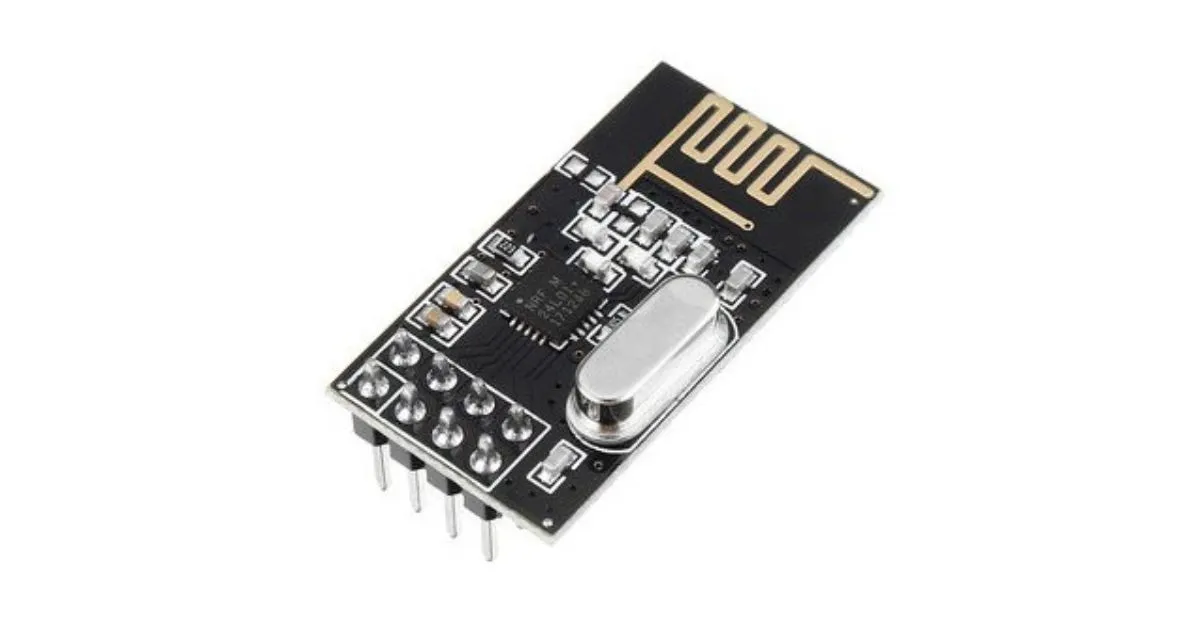
IoT devices are often tiny, battery-powered sensors placed in hard-to-reach environments, where low energy use and remote firmware updates are essential. Updating them without physical access saves time, improves reliability, and keeps real-world deployments running smoothly.
For projects that don’t need Wi-Fi, Antennino offers a smart alternative. Using a 433 MHz radio, it provides simple, low-power connectivity ideal for widespread sensor networks. Small in size but big in potential, Antennino represents a fresh, innovative approach to modern connectivity, making IoT devices more efficient, flexible, and future-ready.
What Is Antennino
Antennino is a small electronic board built around the ATmega328P PicoPower microcontroller. This is the same microcontroller found in an Arduino Uno so users can create sketches through the Arduino IDE with familiar tools. The board includes a communication bus internal sensors external sensor support optional display space plus a strong wireless link through the RFM69 radio module that works on the 433MHz band.
The name Antennino blends the word antenna with the word Arduino. This highlights its purpose as a device that mixes the best of microcontroller simplicity with long range radio performance. The board is low cost. The size is small. The power use is minimal. It works as a remote sensor module or as a gateway device. This dual purpose nature makes the board extremely flexible for a wide variety of IoT projects.
At the heart of Antennino sits an ATmega328P chip. The P in this chip stands for PicoPower which makes the board highly efficient during sleep cycles. The microcontroller communicates with the outside world through the RFM69 transceiver module. The radio supports hardware AES level cryptography which protects data signals from interference. The board also has flash memory for storing sensor logs or for wireless programming. A digital temperature sensor plus a photoresistor are included for instant sensing tests.
Antennino also includes four Grove connectors suited for RS232 I2C generic I O plus an analog input. This increases expansion possibilities using external modules. Makers can plug in motion sensors environmental monitors switches displays actuators etc. The board includes space for mounting a small OLED screen when used in gateway mode. With these features Antennino becomes a powerful building block for remote IoT systems.
How Antennino Fits Into IoT
IoT refers to an ecosystem of devices that gather share process plus react to data. Devices can live in homes cities farms factories hospitals warehouses vehicles plus open landscapes. Antennino fits naturally within this system because it allows seamless communication through low power wireless channels rather than WiFi.
WiFi creates heavy loads on router networks when many devices connect at once. It also uses more energy which reduces battery life. Antennino solves these challenges by using 433MHz links. This band stays free to use in many regions. It has long history in home automation. It offers long range stable signals strong penetration through walls plus low energy drain.
Whether it is monitoring temperature in a greenhouse sensing vibration on a gate controlling a switch in a remote shed or tracking a device in a warehouse Antennino provides the ideal communication backbone.
Why Developers Choose Antennino
Developers like Antennino for several reasons. The board is small so it fits inside tiny enclosures. It is low cost so it fits any budget. It is reliable so it supports long deployments. It is simple to program so project creation is fast. It is adaptable so it works in many fields such as agriculture smart homes construction security health devices automation networks logistics systems etc.
IoT projects need stable signals. Antennino uses a radio system that self adjusts its transmit strength through ATC Automatic Transmission Control. This lowers power use while keeping stable communication. The board is compatible with many sensor types plus can act as a gateway or a remote node. It stays energy efficient so battery life can reach years instead of months.
Antennino as a Remote Module
When used as a remote module Antennino collects data from sensors then sends it to a gateway. It can read temperature brightness motion vibration switches voltage levels soil humidity plus many other values. Once it finishes gathering data it returns to sleep to save energy.
Since Antennino has onboard flash memory it can also act as a data logger. It can store information then send it later in batches if needed. The board includes a system that cuts power to sensors during sleep states. This ensures minimal drain. Antennino becomes an ideal tool for devices installed in places that humans seldom reach.
Antennino as a Gateway
Antennino can also serve as a gateway. In this mode the board collects signals from remote modules then sends them to a connected device such as Arduino Uno Raspberry Pi or a small computer system. Raspberry Pi is often the preferred option because it can store data run scripts perform analysis visualize results plus communicate with cloud services.
The gateway connects to the radio. It also receives messages from several Antennino modules. Each module can report sensor status power level alerts data readings or event triggers.
Power Source Options
Antennino offers multiple ways to power the board. These include:
Two AA batteries
A 3 point 6 to 12 volt external supply
A direct 3 point 3 volt regulated input
The AA battery mode is ideal for remote IoT nodes. The board includes a MAX856 switching regulator. This component extracts stable energy from low voltage input. It works well with batteries that drain slowly over time. Power mode selection relies on jumpers. The correct jumper settings determine which regulator becomes active.
The most efficient mode uses the TPL5110 digital timer to wake the board only when needed. The TPL5110 consumes extremely tiny current. During deep sleep almost the entire board powers off. This leads to multi year battery life under many conditions.
Low Power Management
Antennino can sleep through long periods while drawing almost no energy. It wakes only when the timer triggers it or when an external event sends a signal. The design uses the TPL5110 chip that manages wake cycles. Once awake the microcontroller performs tasks then sends a DONE signal which cuts power again.
The board also measures battery level through internal voltage dividers so users can track energy health. Good low power practice involves disabling A D converters unused modules displays sensors plus radio sections when not required.
Through the PicoPower system the ATmega328P operates at extremely low drain. Combined with the external timer Antennino enters an efficient autonomous cycle that supports long term field deployments.
Wireless System of Antennino
Antennino uses the RFM69 radio module. This module supports 433MHz signals which work well across distances with minimal loss. The module uses SPI signals on the microcontroller pins MOSI MISO SCK plus two lines for chip selection plus interrupts. The radio supports AES level encryption which protects messages from external disruption.
A strong antenna is vital for radio modules. Antennino allows simple copper wire antennas cut to quarter length of the wavelength. For 433MHz the ideal quarter wave is around 164 point 7 mm. Users can attach a UFL connector based antenna too if higher gain is required.
OLED Display Support
Antennino offers a space for a small OLED display which connects through I2C. Developers can mount SSD1306 or SH1106 displays depending on pin layout. The display helps in gateway mode by showing real time data or system status. Since IoT nodes normally run on low energy schedules display use is recommended only when needed.
Practical Applications of Antennino
Antennino fits many use cases across various fields. Here are some common examples:
Smart Agriculture
Antennino can read soil moisture light levels temperature humidity plus send readings to a remote base. Farmers can create low cost networks that improve crop management irrigation timing plus environmental monitoring.
Smart Home Devices
The board can serve as a door sensor window alert motion trigger remote switch vibration detector or light sensor. The long range communication suits garages yards attics rooftops basements plus sheds.
Industrial Monitoring
Factories can use Antennino to track machine vibration motor cycles pressure switches ventilation status plus safety triggers.
Healthcare Equipment
Wearable devices with Antennino can send vital sign data signals in real time. Hospitals can monitor patients with remote low power tools.
Logistics Tracking
Antennino can follow items across storage facilities supply chains warehouses or vehicles. It reports movement position environment or open close events.
Future Growth of Antennino in IoT
As IoT expands Antennino is positioned as a strong tool within automation networks. Future smart cities will need long range low power antennas. Farms will use countless remote sensors. Hospitals will monitor patients through wearable devices. Logistics will track goods through compact nodes. Antennino fits each of these directions.
With the growth of AI systems machine learning models plus cloud data platforms Antennino will act as the front line data collector. Tiny nodes will send information. Smart platforms will process that information. Automation networks will take decisions instantly. Antennino provides simple hardware for this evolving world.
Conclusion
Antennino blends simplicity reliability low power design flexibility security plus strong wireless communication into one compact board. It serves as both sensor node plus gateway. It offers support for external sensors displays low energy timers strong antennas plus stable protocols. It runs on AA batteries for years. It suits many IoT applications in homes cities farms hospitals factories plus supply chains.
With Antennino creators get full control of their IoT ideas. They can design devices that communicate with precision survive long deployments support remote updates operate in hard spaces plus function without WiFi. Antennino stands as a strong stepping stone for anyone building the next generation of smart systems.

Luna is a finance and crypto writer with 5+ years of experience simplifying blockchain, digital assets, and modern financial trends for readers. She breaks down complex Web3 topics with clarity and insight.