
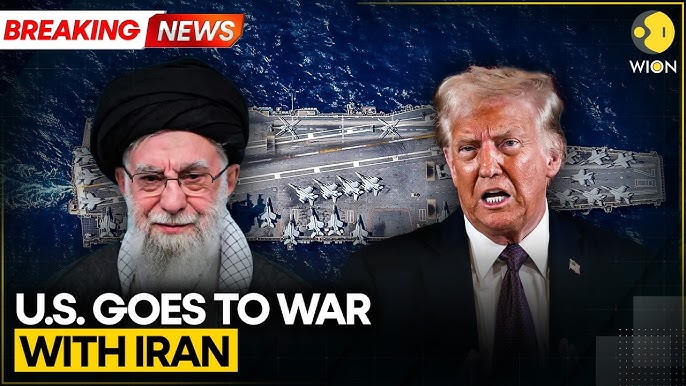
Tensions in the Middle East escalated dramatically Saturday morning after the United States and Israel launched coordinated military strikes on Iran, marking one of the most significant confrontations in the region in recent years. According to Israeli military officials, the operation followed months of what they described as “close and joint planning” between Washington and Tel Aviv.
Israeli authorities stated that the strikes were aimed at the highest levels of Iran’s leadership and military command structure. Among the reported targets were facilities and locations associated with Iran’s Supreme Leader, the country’s president, and the head of its armed forces. While specific operational details were not fully disclosed, Israeli officials indicated that the objective was to weaken Iran’s command capabilities and disrupt what they characterize as aggressive regional activities.
Sources familiar with the situation told media outlets that the United States is preparing for a sustained military campaign that could extend for several days. The coordinated action signals a significant escalation beyond previous shadow conflicts and limited engagements that have defined relations between Israel and Iran for years. Analysts suggest that this move reflects growing concerns in both Washington and Tel Aviv over Iran’s strategic posture and military capabilities.
US President Donald Trump addressed the nation shortly after the strikes were reported, describing the military campaign as “massive and ongoing.” In his remarks, he acknowledged the possibility of American casualties and warned that the operation could carry serious risks. “American lives may be lost,” he said, underscoring the gravity of the unfolding situation.
President Trump also issued a direct message to the Iranian people, urging them to “take over your government.” His comments appeared to signal support for political change within Iran, intensifying the already volatile rhetoric between the two nations. The call for what many interpret as regime change marks a sharp escalation in tone and policy, potentially broadening the scope of the conflict beyond military objectives.
In addition to defending the strikes, President Trump accused Tehran of attempting to rebuild its nuclear program. He claimed that despite what he previously described as devastating US strikes last summer that had “obliterated” key nuclear facilities, Iran had resumed efforts to advance its nuclear capabilities. According to the president, this alleged reconstruction posed an unacceptable threat to regional and global security.
Iran, however, has consistently denied pursuing nuclear weapons. Iranian officials maintain that their nuclear program is intended solely for peaceful purposes, including energy production and medical research. Tehran has long argued that accusations of weaponization are politically motivated and part of a broader campaign to isolate and pressure the country.
Following the initial wave of strikes by the US and Israel, Iran launched a swift and unprecedented retaliation. Iranian forces fired a large number of missiles and drones toward Israel and American-linked targets across the Middle East. The scale of the response marked one of the most extensive direct actions taken by Tehran in recent memory.
Explosions were reported in multiple countries across the region, including the United Arab Emirates, Bahrain, and Qatar. While the extent of the damage and potential casualties remains unclear, the geographic spread of the reported blasts suggests that the confrontation has rapidly expanded beyond a bilateral clash. Regional governments have not yet released full details, but heightened security alerts were reported in several Gulf states.
Military analysts note that the inclusion of US assets and allied countries in Iran’s retaliation signals a broader strategic message. By targeting locations across the Middle East, Tehran may be attempting to demonstrate both capability and deterrence, warning that any sustained campaign against it could carry widespread regional consequences.
The situation has raised fears of a prolonged and potentially devastating conflict. With the United States reportedly preparing for additional days of military operations and Iran demonstrating its willingness to respond forcefully, the risk of further escalation remains high. Diplomatic channels appear strained, and no immediate signs of de-escalation have emerged.
International observers are closely monitoring developments, particularly given the strategic importance of the Middle East to global energy markets and international security. Any sustained conflict involving the US, Israel, and Iran could have far-reaching economic and political implications worldwide.
Within Israel, government officials have defended the operation as necessary for national security, arguing that Iran’s military posture and regional alliances pose an existential threat. Meanwhile, US officials have framed the campaign as a preventive measure aimed at stopping nuclear proliferation and countering destabilizing activities.
In Tehran, state media portrayed the strikes as acts of aggression and vowed that Iran would defend its sovereignty. Iranian leaders emphasized national unity and resilience, while reiterating that their nuclear ambitions remain peaceful.
As the conflict unfolds, uncertainty surrounds the next steps from all sides. The possibility of further missile exchanges, cyber operations, or expanded air campaigns cannot be ruled out. Regional allies of both Washington and Tehran may also face difficult strategic decisions in the coming days.
For now, the Middle East stands on edge as one of its most dangerous confrontations in recent history continues to develop. The coming days will likely determine whether the situation moves toward containment or spirals into a broader regional war with global consequences.

Saqlain is a finance and blockchain writer with 5+ years of experience covering cryptocurrency, digital assets, and emerging fintech trends. He simplifies complex financial and Web3 topics, helping readers stay informed and make smarter decisions in a fast-evolving digital economy.