
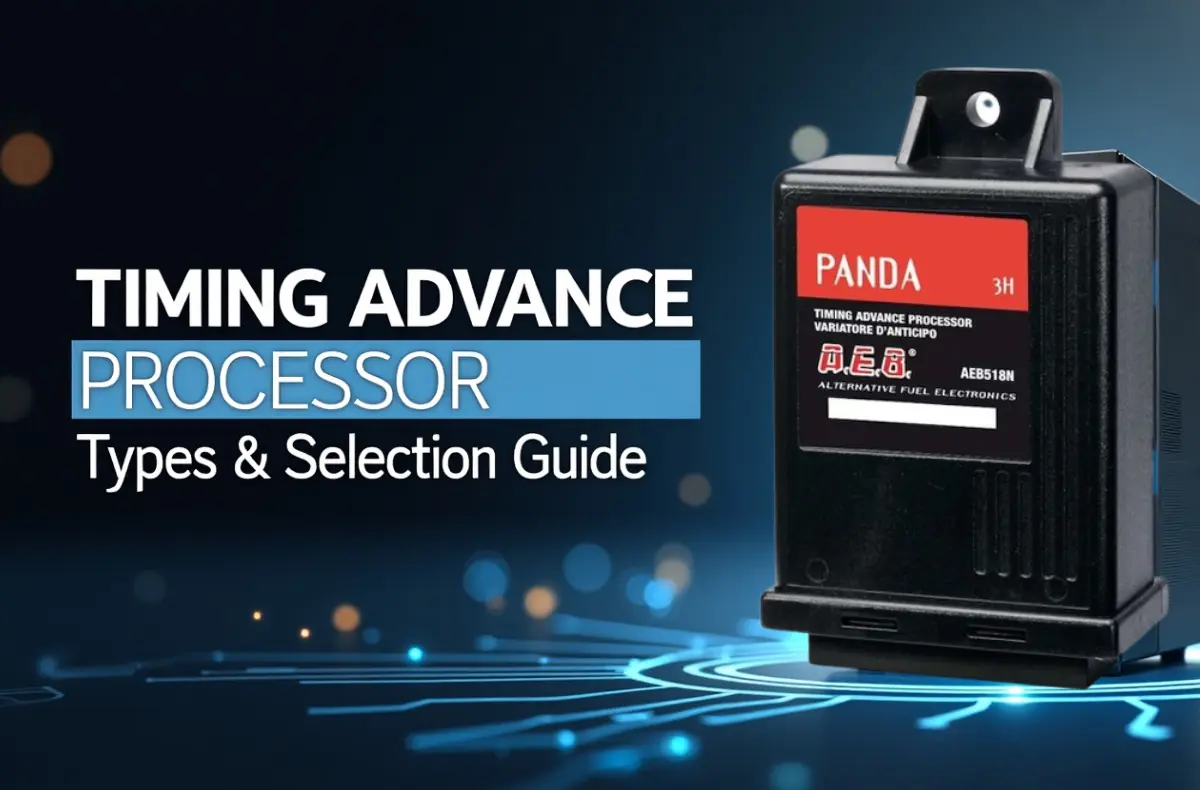
Alternative fuel vehicles have become increasingly popular due to rising fuel costs and stricter emission standards. However, when an engine is converted from petrol to CNG or LPG, its original ignition calibration no longer delivers optimal results. These fuels burn at a slower rate and require a different spark strategy to achieve efficient combustion. This is why ignition timing correction is not optional but essential. A properly selected Timing Advance Processor ensures the engine fires the spark at the correct moment, restoring lost power, improving drivability, and protecting engine components.
This comprehensive guide explains ignition timing correction in a clear, structured way. It covers how timing advance technology works, how to select the right unit for different ignition systems, and how proper setup improves long-term performance. The article is written for mechanics, installers, and automotive professionals who want reliable technical insight without confusion.
What Is a Timing Advance Processor and Why Is It Important?
A timing advance unit is an electronic module designed to modify ignition timing when an engine runs on gaseous fuels. Petrol engines ignite fuel quickly, while CNG and LPG need more time for complete combustion. If ignition timing is not corrected, combustion pressure peaks too late, reducing torque and fuel efficiency.
A Timing Advance Processor intercepts the ignition signal and advances it by a calculated amount. This ensures combustion pressure reaches its peak at the correct crankshaft angle. The result is smoother operation, stronger acceleration, and better fuel economy.
Most modern processors also include a bypass or emergency connector. This feature allows the system to instantly revert to factory ignition timing if a fault occurs, ensuring safety and uninterrupted vehicle operation.
How Does a Timing Advance Processor Work?
The processor works by analyzing the ignition reference signal generated by the vehicle’s ignition system or crankshaft sensor. It then modifies this signal before passing it on to the ignition coil or engine control unit.
Depending on the system design, the processor may shift pulse timing, alter signal frequency, or introduce a controlled delay or advance. The goal is always the same: ignite the fuel-air mixture earlier so that slower-burning fuels deliver maximum power.
A correctly configured Timing Advance Processor operates seamlessly in the background. The driver experiences improved performance without noticing any abrupt changes in engine behavior.
What Types of Ignition Systems Require Timing Advance Correction?
Ignition systems vary widely across vehicle generations, and each type requires a compatible solution.
Older vehicles use mechanical breaker point systems, where ignition timing depends on physical contacts and centrifugal mechanisms. These systems require simple processors that can safely handle low-voltage analog signals.
Electronic distributor-based systems replace mechanical points with electronic switching modules. Although more precise, they still rely on distributor timing and need processors capable of handling faster electronic signals.
Advanced electronic ignition systems use dedicated ignition modules that dynamically adjust timing. These systems often benefit from programmable processors that allow custom advance curves.
Modern engines use crankshaft position sensors to determine exact crank angle. These sensors may be inductive or Hall-effect types, and each requires a processor specifically designed to read and modify its signal without distortion.
How to Choose the Right Timing Advance Processor for Your Vehicle
Selecting the correct unit starts with identifying the ignition system type. Installing the wrong processor can lead to misfires, poor performance, or complete engine failure.
Fuel type is equally important. CNG typically allows more aggressive advance due to its high octane rating, while LPG requires a more moderate adjustment. The processor must support the intended fuel configuration.
Adjustment range matters as well. Some engines need only a fixed advance, while others benefit from variable timing across different RPM ranges. Programmable models offer greater flexibility for complex setups.
A reliable Timing Advance Processor should always include fail-safe features such as emergency bypass connectors. These ensure the vehicle can operate normally during diagnostics or in case of system malfunction.
How Is a Timing Advance Processor Installed and Calibrated?
Installation always begins with disconnecting the battery to protect electronic components. Wiring must follow manufacturer diagrams exactly, with careful attention to grounding and signal polarity.
Once installed, the processor is set to a baseline advance value recommended for the fuel type and engine configuration. Fine-tuning is then performed by monitoring engine response at idle and under load.
Timing lights, diagnostic scanners, or oscilloscopes are commonly used to verify that ignition advance changes occur correctly across the RPM range. For crankshaft sensor systems, maintaining signal integrity is especially critical.
A properly installed Timing Advance Processor improves performance without introducing hesitation, knocking, or starting issues.
What Are Common Problems and How Can They Be Fixed?
Incorrect timing adjustment often produces noticeable symptoms. Knocking under acceleration usually indicates insufficient advance for gaseous fuel. Sluggish response may point to excessive advance.
Hard starting or rough idle is commonly caused by wiring errors or incorrect idle exclusion settings. In such cases, using the emergency bypass to restore factory timing is the safest diagnostic step.
Most issues can be resolved through careful recalibration and verification of wiring connections.
How Does Timing Advance Improve CNG and LPG Performance?
CNG has a high octane rating and burns slowly, making it ideal for advanced ignition timing. With correct timing, engines run cooler, cleaner, and more efficiently.
LPG behaves similarly to high-grade petrol but still benefits from earlier ignition due to its vaporization characteristics. Correct timing reduces exhaust temperatures and improves throttle response.
When ignition timing is optimized, alternative fuel engines deliver better power, reduced emissions, and longer engine life.
Why Professional Selection and Setup Matters
Choosing and tuning a Timing Advance Processor requires technical understanding of engine behavior and ignition systems. Professional installers can tailor timing strategies to specific vehicles and driving conditions.
Although quality processors represent an upfront cost, the investment is quickly recovered through improved fuel efficiency, reduced maintenance, and better overall performance.
Conclusion
Converting a vehicle to CNG or LPG without correcting ignition timing limits its potential. Proper ignition advance is essential for achieving efficient combustion, strong performance, and long-term reliability. A correctly selected and calibrated Timing Advance Processor ensures the engine operates exactly as it should on alternative fuels. By understanding ignition system types, choosing compatible equipment, and following best installation practices, automotive professionals can deliver conversions that are both powerful and dependable.
FAQs
What is a Timing Advance Processor used for?
It adjusts ignition timing so engines running on CNG or LPG ignite fuel earlier, improving efficiency and power.
Is timing advance necessary after fuel conversion?
Yes, without timing correction, alternative fuel engines often suffer from power loss and poor fuel economy.
Can incorrect timing advance damage the engine?
Improper settings can cause knocking, overheating, and increased wear, making correct calibration essential.
Does timing advance improve fuel economy?
When properly tuned, ignition advance improves combustion efficiency and often reduces fuel consumption.
Should timing advance systems be installed by professionals?
Professional installation is strongly recommended to ensure compatibility, safety, and optimal performance.

Saqlain is a finance and blockchain writer with 5+ years of experience covering cryptocurrency, digital assets, and emerging fintech trends. He simplifies complex financial and Web3 topics, helping readers stay informed and make smarter decisions in a fast-evolving digital economy.